
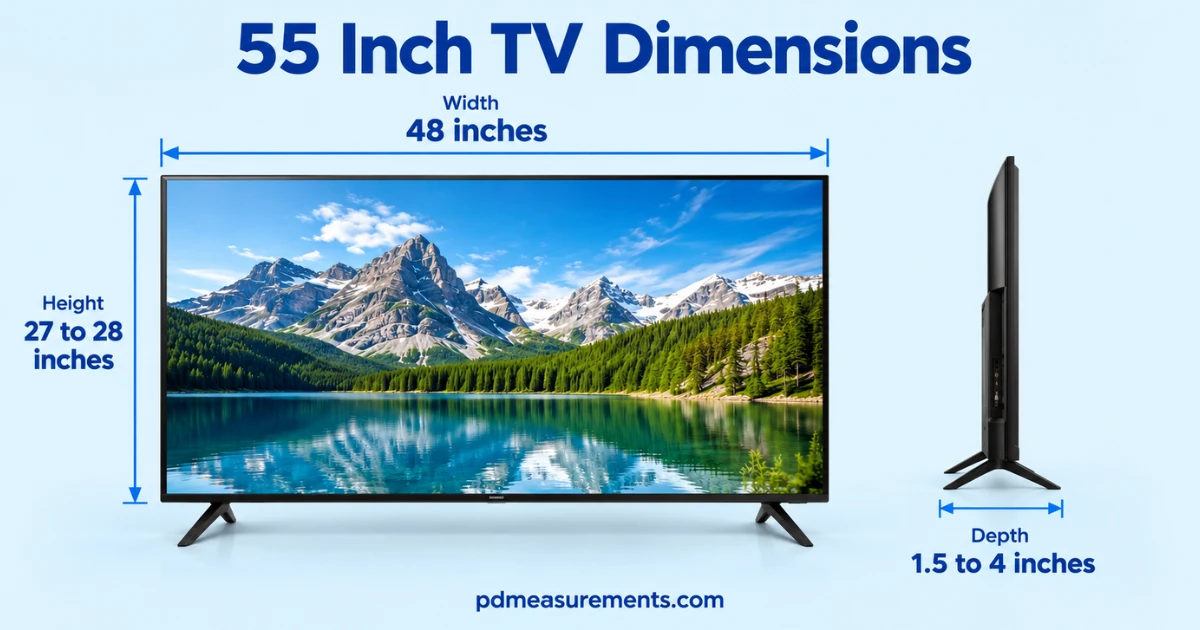
A standard 55 inch TV measures about 48 inches wide and 27 to 28 inches tall. That’s based on the common 16:9 aspect ratio used in nearly every modern television.
Depth is the smallest number but still matters. Most flat-panel sets run 1.5 to 4 inches deep, depending on the panel type and whether a stand is attached.
55 Inch TV Width and Height (Inches)
- Width: 47.9–48 inches
- Height: 27–27.9 inches
- Depth: 1.5–4 inches (panel only)
- Diagonal: 55 inches
These numbers hold steady across most brands, though bezel size can shift the width by a fraction of an inch.
55 Inch TV Dimensions in Centimeters (cm)
For anyone working in metric, here are the 55 inch TV dimensions in cm:
- Width: 121.7–121.9 cm
- Height: 68.5–68.6 cm
- Diagonal: 139.7 cm
These figures match the Pythagorean calculation used industry-wide, so they stay consistent no matter which retailer you check.
Diagonal vs. Width: Why 55 Inches Isn’t the Actual Size
Here’s the part most buyers miss: the “55 inch” label refers to the diagonal screen measurement — corner to corner. It says nothing about the actual footprint.
Manufacturers use diagonal sizing because it gives a single, consistent number across different screen shapes. Without it, comparing a widescreen set to an older 4:3 model would be confusing.
So when you’re checking if a TV fits your wall or cabinet, the diagonal number is the wrong one to measure against. Always use the actual width instead.
55 Inch TV Depth
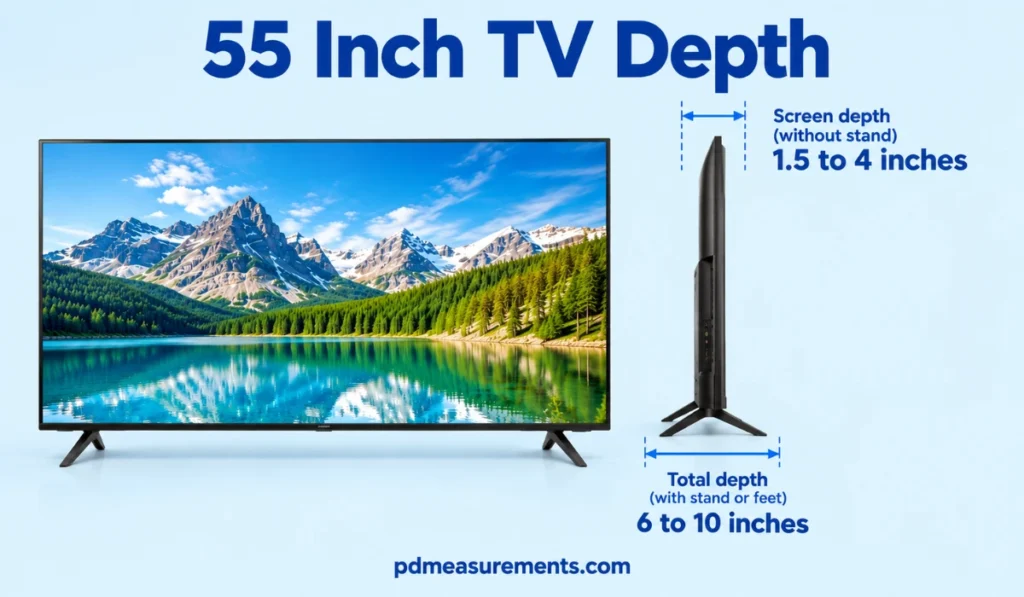
Screen depth alone is usually just 1.5 to 4 inches thanks to slim LED and OLED panels. Add the stand or feet, and total depth can reach 6 to 10 inches.
If you’re planning a recessed shelf or a tight media console, measure with the stand attached — not just the panel.
55 Inch TV Dimensions by Brand
How Are 55 Inch TV Dimensions Calculated?
TV width and height come from basic geometry, not guesswork. Manufacturers apply the Pythagorean theorem using the diagonal size and the screen’s aspect ratio.
16:9 Aspect Ratio and the Pythagorean Theorem
The formula is c² = a² + b², where c is the diagonal, a is the width, and b is the height. For a 16:9 screen, this splits the diagonal into 16 width units and 9 height units.
Solving for a 55 inch diagonal gives a width near 47.9 inches and a height near 27 inches. This is why the math lines up almost identically across every major brand.
55 Inch TV Weight
Weight depends on panel technology and materials, but most 55 inch TVs land between 30 and 50 pounds (13.6 to 22.7 kg).
OLED and QLED panels tend to weigh a bit more due to denser backlighting or self-lit pixel layers. Removing the stand typically shaves off a few pounds, which matters if you’re wall-mounting.
55 Inch TV Box Dimensions for Shipping and Moving
The shipping box is always larger than the TV itself, built with foam padding and cardboard reinforcement. Expect a box around 52–54 inches wide, 32–34 inches tall, and 6–8 inches deep.
55 Inch TV Box Weight
Once packaging, foam, and manuals are included, total box weight typically runs 40 to 60 pounds. Keep this in mind when planning a move, curbside pickup, or a two-person carry.
55 Inch TV Stand Dimensions and Sizing
Stand sizing depends entirely on the stand type. A cabinet needs extra width for balance, while a VESA floor stand relies on a weighted base instead.
More Post: Tennis Court Dimensions: Singles, Doubles, Layout, Net Height & Court Size
What Size TV Stand Fits a 55 Inch TV
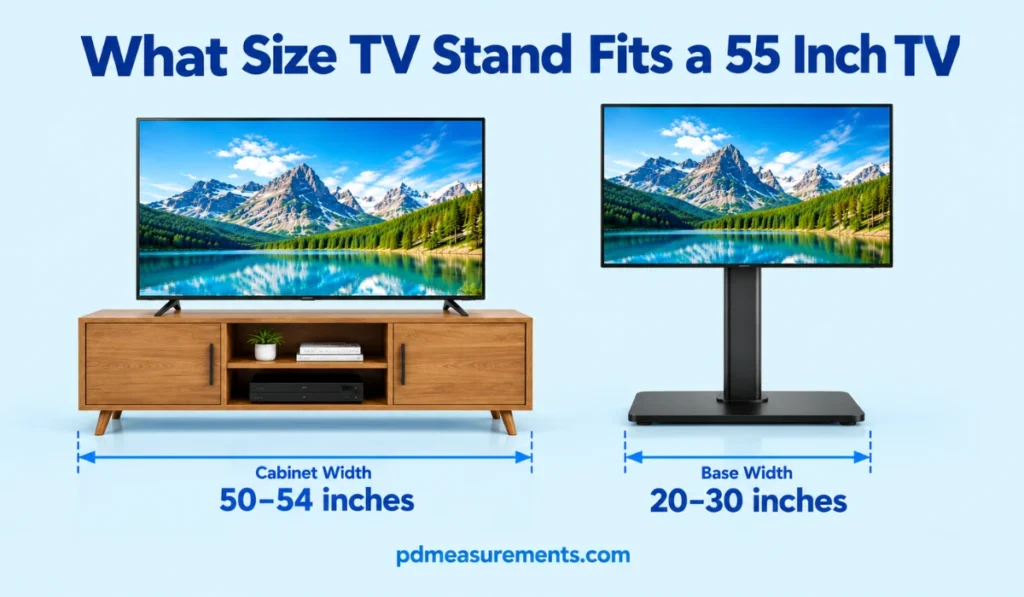
For cabinets, target 50–54 inches wide. For freestanding VESA stands, width matters less — a base of just 20–30 inches can safely support a 55 inch panel because the TV bolts directly to a central pole.
Ideal Viewing Distance for a 55 Inch TV
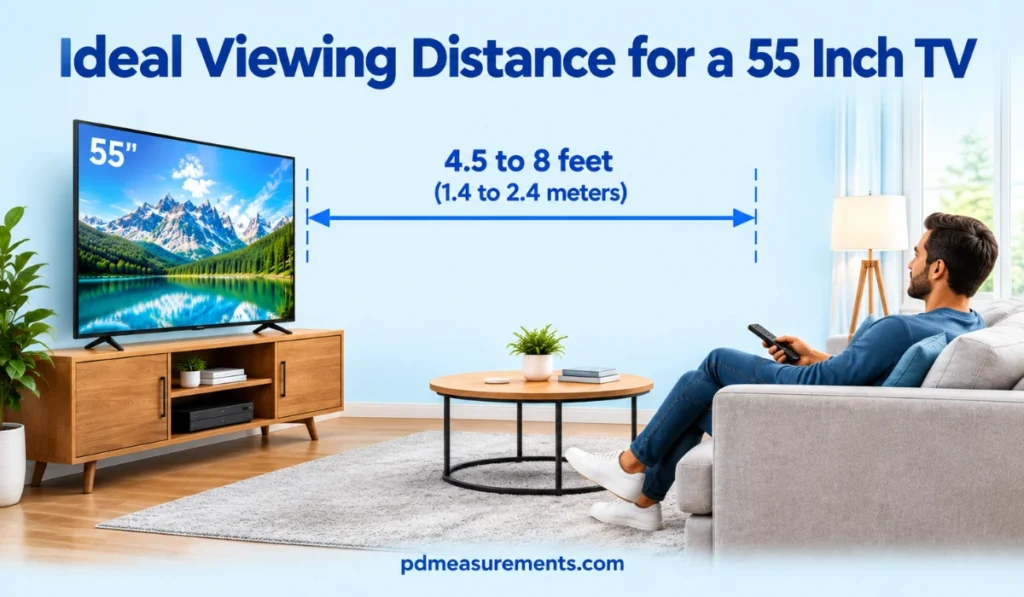
The ideal viewing distance for a 55 inch TV ranges from about 4.5 to 8 feet (1.4 to 2.4 meters), depending on resolution.
4K content allows closer seating because pixel density is higher, while Full HD content needs a bit more distance to avoid visible pixelation.
Viewing Distance Chart (4K vs Full HD)
- 4K, Daily viewing: ~7 feet (2.1m)
- 4K, Immersive/cinema: ~5.5 feet (1.7m)
- Full HD, Optimal: ~9 feet (2.8m)
- Full HD, Range: 7–11.5 feet (2.1–3.5m)
These figures follow SMPTE and THX viewing-angle standards used across the home theater industry.
Ideal Room Size for a 55 Inch TV
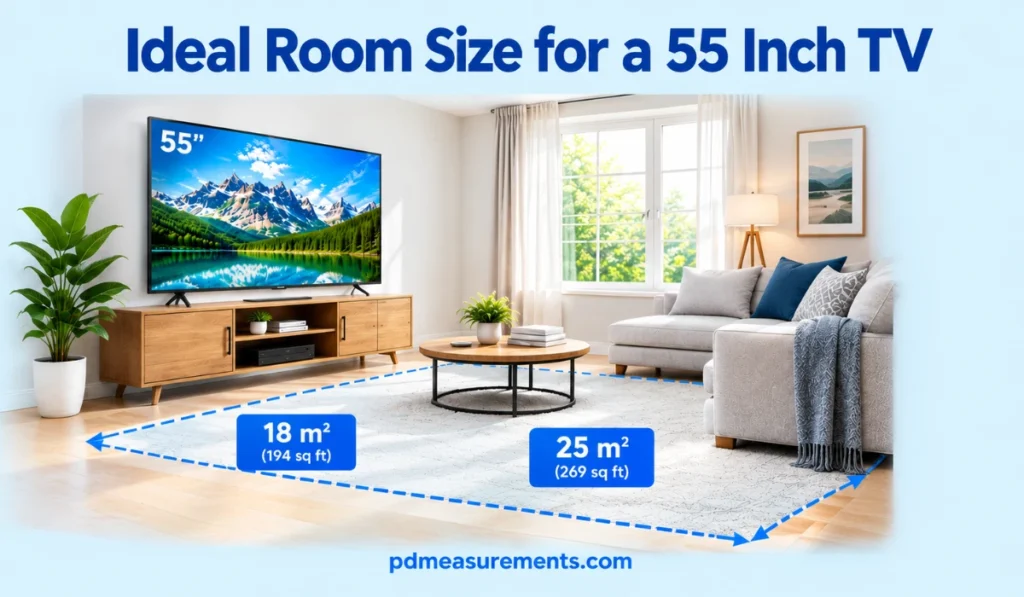
A 55 inch TV fits comfortably in rooms starting around 18 square meters (194 sq ft), with 25 square meters (269 sq ft) considered ideal for a relaxed, immersive setup.
Smaller rooms can still work, but seating distance becomes the limiting factor rather than floor space.e.
55 Inch TV Dimensions Compared to Other Sizes
55 Inch vs 50 Inch TV Dimensions
A 50 inch TV measures about 43.7 inches wide by 24.6 inches tall — roughly 4 inches narrower than a 55 inch model.
55 Inch vs 65 Inch TV Dimensions
A 65 inch TV measures about 56.7 inches wide by 31.9 inches tall, adding nearly 9 inches of width over a 55 inch screen.
55 Inch vs 75 Inch TV Dimensions
A 75 inch TV jumps to roughly 65.4 inches wide by 36.8 inches tall — over 17 inches wider than a 55 inch set, making room size a bigger factor
55 Inch TV Dimensions FAQs
What are the dimensions of a 55-inch TV?
A 55 inch TV measures about 48 inches wide and 27 to 28 inches tall, with a 55 inch diagonal screen and roughly 1.5 to 4 inches of depth.
What are the dimensions of a 55-inch TV box?
The shipping box typically measures around 52–54 inches wide, 32–34 inches tall, and 6–8 inches deep, built larger than the TV to allow for protective foam padding.
What are the dimensions of a 55-inch TV in centimeters?
In centimeters, a 55 inch TV measures about 121.7–121.9 cm wide and 68.5–68.6 cm tall, with a diagonal of 139.7 cm.
How much space do I need for a 55-inch TV?
Plan for at least 50 inches of wall or console width, plus a few extra inches on each side for cables, airflow, and a balanced visual look.
What is the exact size of a 55 inch TV?
The exact size varies slightly by brand, but most 55 inch TVs measure close to 47.9–48.7 inches wide and 27–28.3 inches tall, based on the 16:9 aspect ratio.
Is a 55 inch TV too big for a living room?
No. A 55 inch TV is a standard, popular size for living rooms and fits comfortably in most spaces when paired with the right seating distance.

Rehmaan Khan is a Measurement Content Researcher Specializing in PD measurements, Size Guides, Charts, and Simple Educational Measurement Content.