
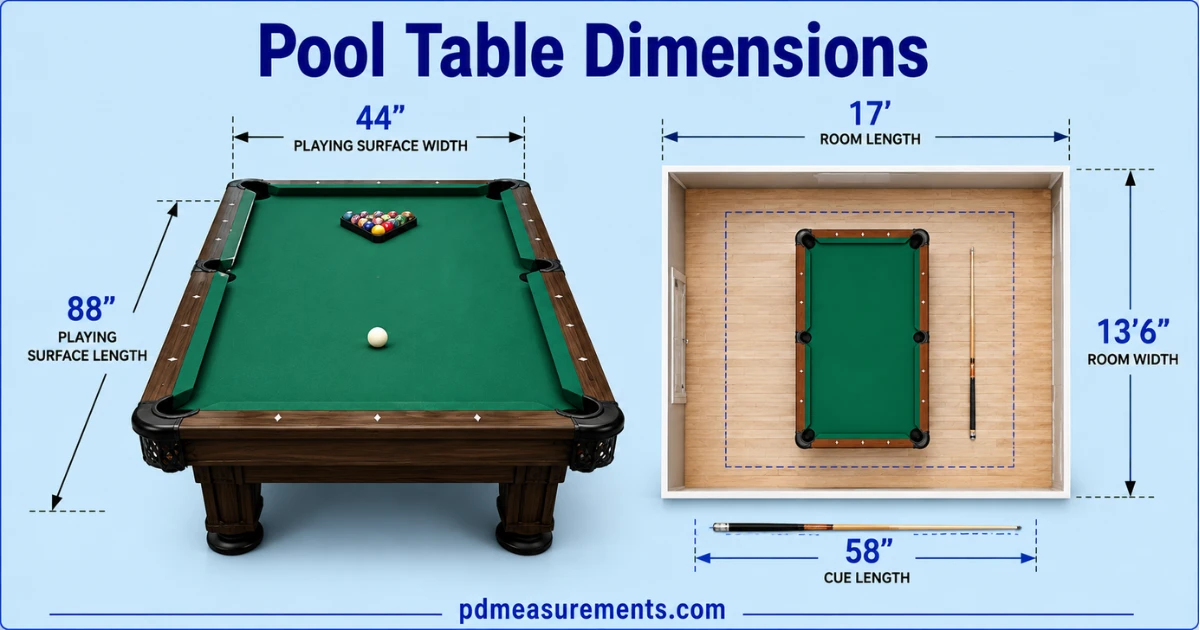
A standard 8-foot pool table has a 44 × 88-inch playing surface and typically needs about a 13’6″ × 17′ room for comfortable play with a 58-inch cue.
This guide breaks down every standard size, the exact room space each one needs, and the details most buying guides skip — like ceiling height and doorway clearance.
What Are Standard Pool Table Dimensions?
Pool tables aren’t one-size-fits-all. Manufacturers build them in a handful of standard sizes, each suited to a different room and skill level.
Knowing these sizes before you shop saves you from measuring mistakes and costly returns.
Pool Table Size Chart (6ft, 7ft, 8ft, 8.5ft, 9ft)
Playing Surface vs. Overall Table Dimensions
The playing surface is the felt area between the cushion noses — where the balls actually roll. The overall table dimension includes the wooden rails around the outside.
This distinction matters. A “7-foot table” refers to the rail-to-rail length, not the felt itself. Confusing the two is a common buyer mistake.
Pool Table Dimensions by Size
6-Foot Pool Table Dimensions
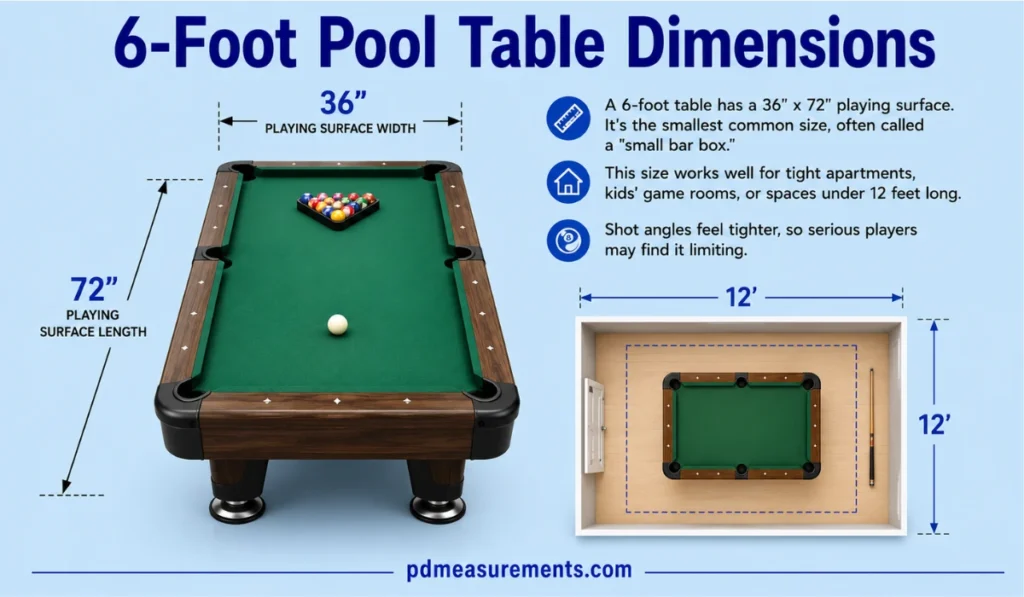
A 6-foot table has a 36″ x 72″ playing surface. It’s the smallest common size, often called a “small bar box.”
This size works well for tight apartments, kids’ game rooms, or spaces under 12 feet long. Shot angles feel tighter, so serious players may find it limiting.
7-Foot Pool Table Dimensions (Bar Box)
The 7-foot table measures 39″ x 78″ on the playing surface. You’ve likely played on one — it’s the standard size found in bars, pubs, and pool halls across the USA.
It’s a smart pick for casual home players with modest space. The smaller footprint still delivers a real, competitive game.
8-Foot Pool Table Dimensions (Standard Home Size)
The 8-foot table has a 44″ x 88″ playing surface. It’s widely considered the most popular pool table size for home use because it balances playability with a manageable footprint.
Most American game rooms are built around this size. It gives serious players room to develop real skill without demanding a massive space.
8.5-Foot Pool Table Dimensions (Oversized)
An oversized 8-foot table, sometimes labeled “pro 8,” has a 46″ x 92″ playing surface. It sits between the standard 8-foot and full 9-foot tournament table.
This size appeals to intermediate and advanced players who want a bigger challenge but don’t have room for a full 9-footer.
More Post: Pickleball Court Dimensions: Complete Size & Line Measurement Guide
9-Foot Pool Table Dimensions
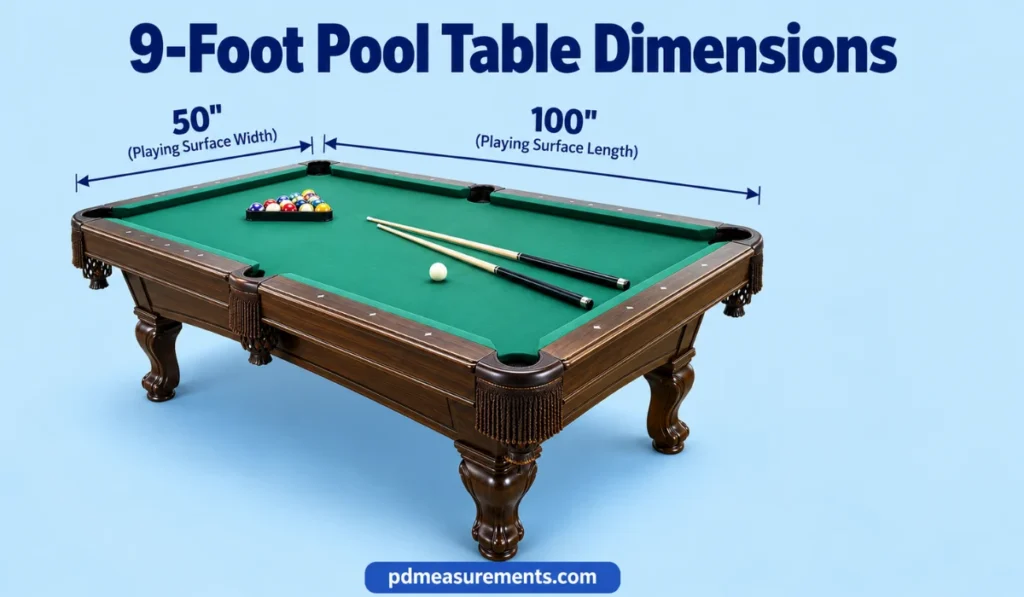
The 9-foot table is the regulation tournament size, with a 50″ x 100″ playing surface. It’s the table used in professional competitions and major pool leagues.
Serious players prefer this size because it mirrors official tournament conditions. It also demands the most room of any standard table.
Regulation Pool Table Dimensions Explained
A regulation pool table follows a strict 2:1 length-to-width ratio — the playing surface is always exactly twice as long as it is wide.
This ratio keeps rebound angles consistent, which is why the World Pool-Billiard Association and most sanctioned leagues require it for tournament play.
Pool Table Room Size Requirements
Room size is the single biggest factor in choosing a pool table dimension. Too small a room, and every shot near the rail becomes a struggle.
Minimum Room Size Chart by Table Size
Using a standard 58-inch cue, here are widely used minimum room guidelines, drawing on data from Brunswick Billiards and industry FAQ sources:
Cue Length and Clearance Space Formula
The math behind these numbers is simple:
Room length = table length + (2 x cue length) Room width = table width + (2 x cue length)
A standard cue runs 58 inches. Add that twice — once per side — to get comfortable cue clearance for a full backswing.
Pool Table Dimensions for Small Rooms
Using Shorter Cues (48″/52″)
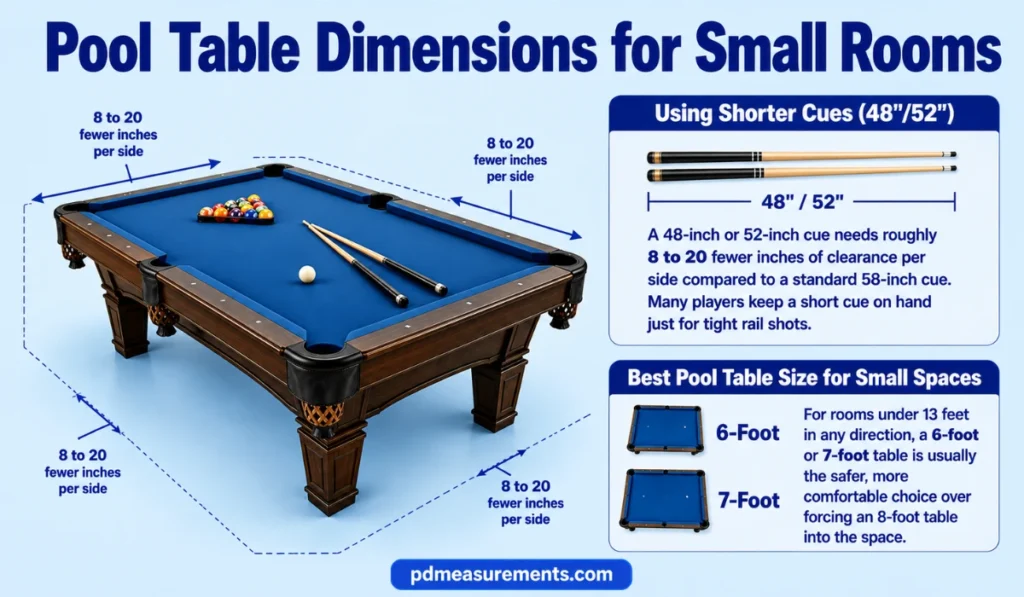
A 48-inch or 52-inch cue needs roughly 8 to 20 fewer inches of clearance per side compared to a standard 58-inch cue. Many players keep a short cue on hand just for tight rail shots.
Best Pool Table Size for Small Spaces
For rooms under 13 feet in any direction, a 6-foot or 7-foot table is usually the safer, more comfortable choice over forcing an 8-foot table into the space.
Ceiling Height Requirements for Pool Tables
Most buying guides skip this, but ceiling height matters just as much as floor space. A pool table light fixture typically hangs 32 to 36 inches above the playing surface.
That means most game rooms need at least 8 feet of ceiling height to fit both the table and proper lighting without glare or shadow issues.
Pool Table Weight and Doorway Clearance
Slate pool tables are heavy — an 8-foot table can weigh 700 to 1,000 pounds once assembled. Delivery teams disassemble the table for transport, but rails and slate pieces still need doorway and stairwell clearance.
Measure your doorways, hallways, and stair turns before delivery day. This step prevents delivery delays and last-minute installation problems.
Pool Table Dimensions vs. Snooker Table Dimensions
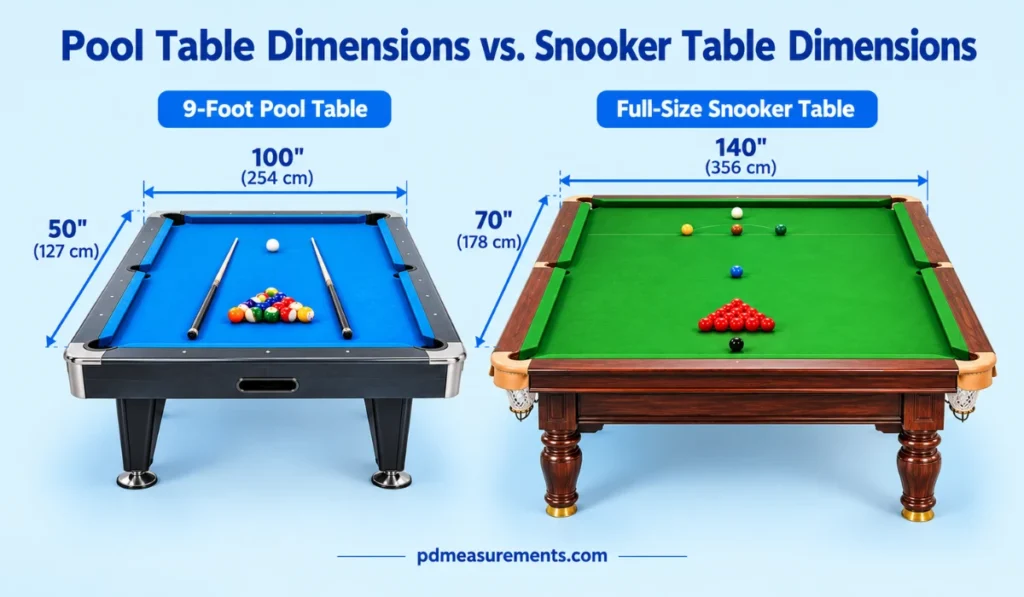
Snooker tables are a different animal entirely. A full-size snooker table measures 140″ x 70″ — nearly 40% longer than a 9-foot pool table.
If you’re comparing the two, know that snooker demands a significantly larger room, often 22 feet or more in length.
Standard vs. Bar-Box vs. Oversized Pool Tables
These terms get mixed up often, so here’s the simple breakdown:
- Bar-box tables are 7-foot tables, built tough for commercial, coin-operated use.
- Standard tables are 8-foot tables, the most common size in American homes.
- Oversized tables are 8.5-foot or 9-foot tables, built for serious or tournament-level play.
Cost by Pool Table Size
Larger pool table dimensions generally cost more due to material and slate weight. As a general market range:
- 7-foot tables: roughly $900–$2,500
- 8-foot tables: roughly $1,500–$4,000
- 9-foot tables: roughly $2,500–$8,000+
Prices vary widely by brand, wood finish, and slate quality, so treat these as general starting ranges.
Frequently Asked Questions About Pool Table Dimensions
Are pub pool tables 6ft or 7ft?
Most pub and bar pool tables are 7-foot tables, sometimes called “bar boxes.” A 6-foot table is less common and usually reserved for very tight commercial spaces or home game rooms.
Can a pool table fit in a 12×12 room?
A 12×12 room is tight for a standard pool table. Even a 6-foot table typically needs a room close to 12′ x 15′ with a standard cue. A shorter 48-inch cue can help make a 6-foot table workable in this space.
Should I buy a 7 or 8 foot pool table?
Choose a 7-foot table if your room is under 16 feet long or you play mostly casual games. Choose an 8-foot table if you have at least 17 feet of length and want the most popular, versatile home size.
How much room do you need for a 7ft pool table?
A 7-foot pool table needs a minimum room size of about 13′ x 16′, based on a standard 58-inch cue. This gives players enough clearance for a full, comfortable backswing on every shot.
Which is better for me, a 6 foot pool table or a 7 foot pool table?
A 7-foot table offers a more authentic playing experience and is the standard size used in most bars. A 6-foot table only makes sense if your room genuinely can’t fit a 7-footer, since it noticeably shortens shot angles.
What is the most popular size pool table for home use?
The 8-foot pool table is the most popular size for American homes. It offers a serious, satisfying game without requiring the large room a 9-foot tournament table demands.

Rehmaan Khan is a Measurement Content Researcher Specializing in PD measurements, Size Guides, Charts, and Simple Educational Measurement Content.