
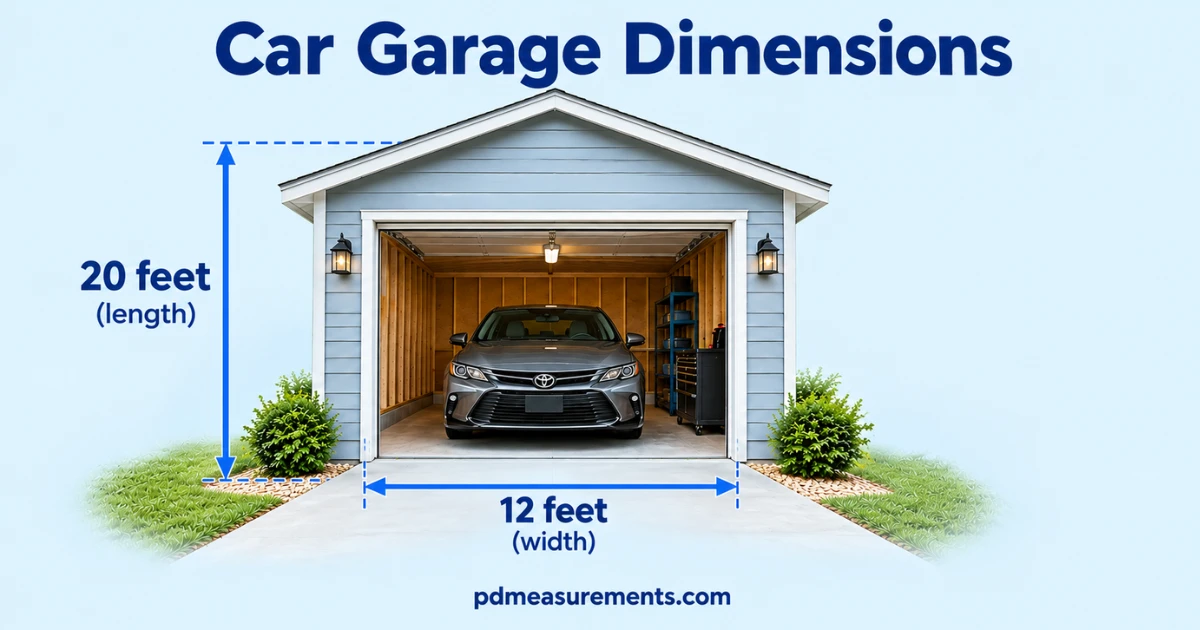
A standard single-car garage typically measures about 12 × 20 feet, while a two-car garage is commonly around 20 × 20 feet, with larger sizes offering more room for storage and vehicle access.
Standard Car Garage Dimensions by Number of Cars
One-Car Garage Dimensions
A standard one-car garage size is 12×20 feet, or 240 square feet. This fits most sedans with room to open doors.
For extra space, many homeowners choose 12×24 (288 sq. ft.) or 14×24 (336 sq. ft.) to add a workbench or storage shelving.
Two-Car Garage Dimensions
More Post: Printer Paper Dimensions: Letter, A4, Legal, Tabloid & ANSI Sizes
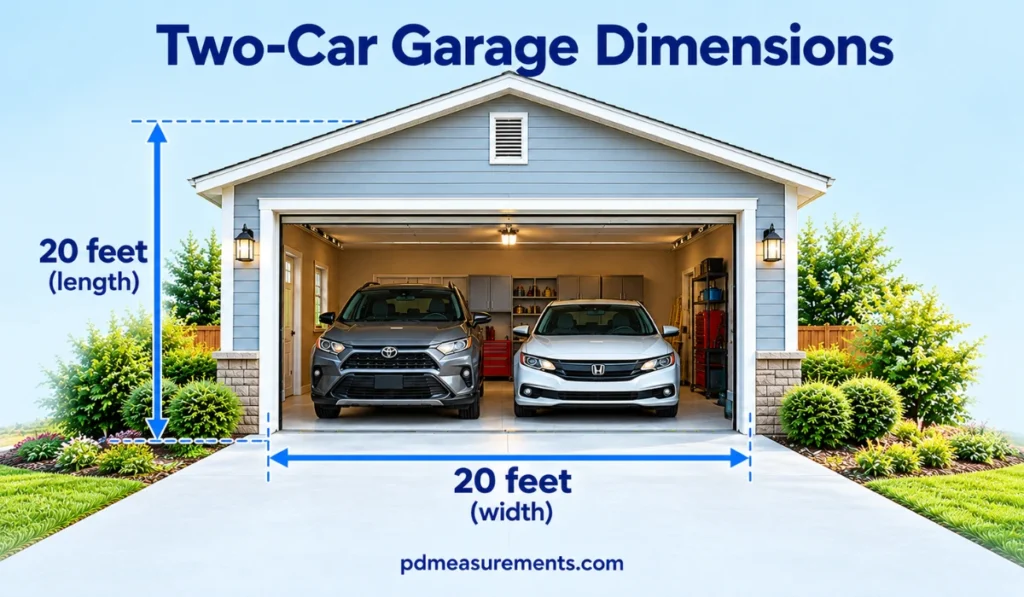
The most common 2-car garage dimensions are 20×20 feet (400 sq. ft.). This works for two smaller vehicles parked side by side.
24×24 feet (576 sq. ft.) is the modern comfort standard. It gives each car room to open doors without dinging the other vehicle.
Three-Car Garage Dimensions
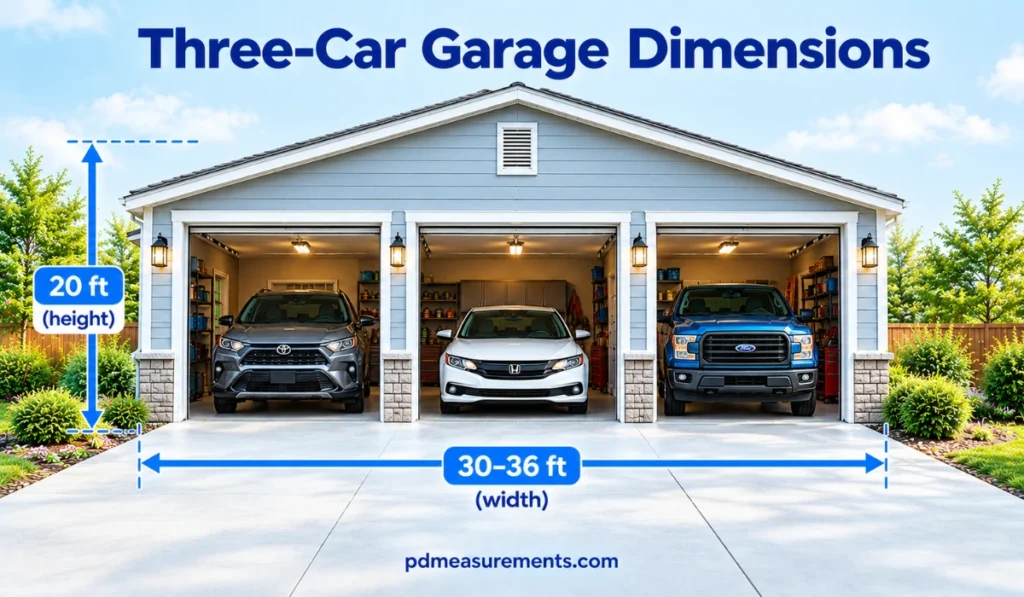
A typical 3-car garage size runs 30×20 feet to 36×24 feet, roughly 600 to 864 square feet. Width grows fastest here since each car needs its own bay.
Four-Car Garage Dimensions
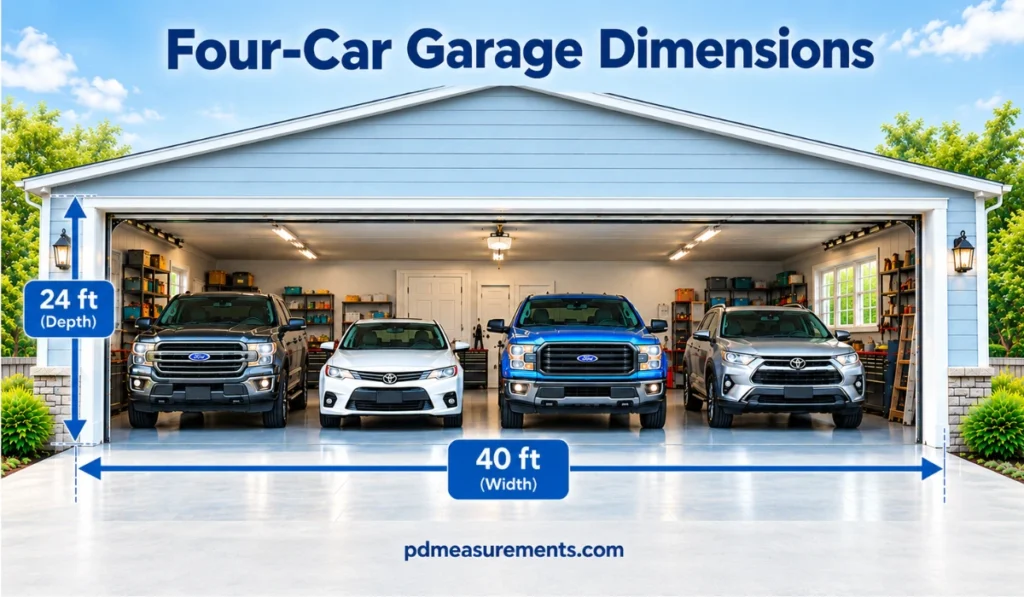
Four-car garages usually measure 40×24 feet or larger, around 960 square feet. These often include a mix of tandem and side-by-side bays.
Garage Dimensions and Square Footage at a Glance
Minimum Car Garage Dimensions You Should Know
Every garage has a floor, and it’s smaller than most people expect.
Absolute Smallest Garage Size
The smallest garage size on record is 10×18 feet. It fits a compact car, but only just.
10×20 and 10×10 garages exist too, but they’re tight even for small cars. We’ll cover exact fit questions in the FAQ below.
Minimum Width for Comfortable Door Clearance
12 feet wide is the real minimum for daily use. Anything narrower makes it hard to open car doors fully without hitting a wall.
When Minimum Isn’t Enough
If you carry groceries, kids, or gear, minimum dimensions get old fast. A few extra feet of width pays off every single day.
Car Garage Dimensions by Vehicle Type
Not all vehicles need the same footprint. Vehicle length and width drive the real number.
Sedan and Compact Car Garage Sizing
Most sedans measure 14 to 16 feet long and under 6 feet wide. A 12×20 garage handles these with ease.
SUV and Minivan Garage Sizing
SUVs and minivans run 16 to 17 feet long. A 12×22 or 14×22 garage gives safer clearance.
Full-Size Truck Garage Sizing
Full-size pickups stretch 19 to 22 feet long. These need at least a 14×24 garage, sometimes deeper for extended-cab models.
RV, Boat, and Oversized Vehicle Garage Sizing
RVs and boats often exceed 24 feet. Oversized garages or detached structures with taller doors are the practical answer here.
Garage Depth vs. Garage Width
Depth determines whether your vehicle fits at all. Width determines how comfortable it is to use the space.
Why Depth Matters More Than Width for Most Vehicles
A garage that’s too shallow means your bumper blocks the door track. This is the single most common sizing mistake homeowners make.
Recommended Clearance Around a Parked Car
Aim for 2 to 3 feet of clearance on each side and at both ends. This gives room for doors, walking space, and storage.
1.5-Car Garage Dimensions Explained
A 1.5-car garage sits between a one-car and two-car footprint, usually 16 to 20 feet wide. Length matches standard one-car depth.
This layout suits single-vehicle households who still want extra room for bikes, tools, or a small workshop corner.
Garage Door Sizes and How They Relate to Garage Dimensions
Standard Single Garage Door Dimensions
Standard single garage doors measure 8 or 9 feet wide by 7 feet tall. This matches a 12-foot-wide garage bay comfortably.
Standard Double Garage Door Dimensions
Double garage doors run 16 feet wide by 7 feet tall, fitting a 20 to 24-foot-wide two-car garage.
Custom Garage Door Sizes for Oversized Vehicles
Trucks, RVs, and lifted vehicles often need 8 to 10-foot-tall doors. Custom sizing costs more but prevents daily frustration.
Garage Ceiling Height Requirements
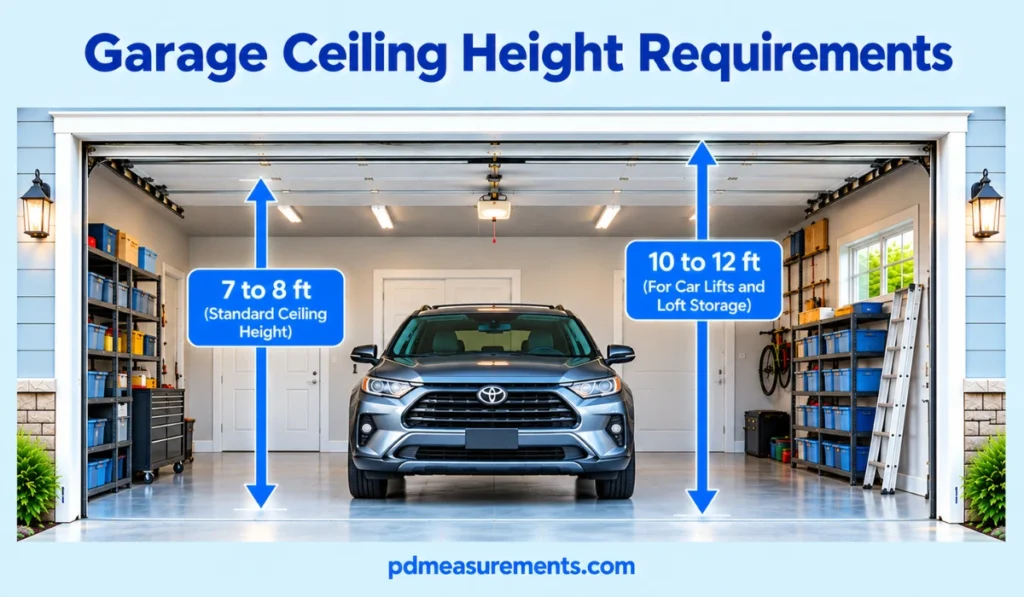
Standard Ceiling Height for Car Garages
Most garages have 7 to 8-foot ceilings. This suits standard vehicles and basic overhead storage.
Ceiling Height for Car Lifts and Loft Storage
If you want a car lift or a storage loft, plan for 10 to 12 feet. Lower ceilings simply won’t clear the equipment.
Attached vs. Detached Garage Dimensions: What Changes
Where your garage sits affects how easily you can size or resize it.
Sizing Differences Between Attached and Detached Garages
Attached garages share a wall with your house, so their footprint is often fixed by the existing structure. Detached garages give you a blank slate.
Expansion Potential for Each Type
Detached garages are easier to expand later since they don’t touch load-bearing house walls. Attached garages face more zoning and structural limits.
Factors That Affect Your Ideal Car Garage Dimensions
Size isn’t one-size-fits-all. These factors shift the right number for your home.
Vehicle Size and Future Vehicle Plans
Measure your current car, but also think ahead. Upgrading to a truck or SUV later means today’s small garage becomes tomorrow’s tight squeeze.
Storage, Workbench, and Shelving Needs
Tools, seasonal gear, and a workbench all eat into usable space. Add at least 3 to 4 feet of depth if storage matters to you.
EV Charging Equipment and Panel Space
Electric vehicle charging stations need wall space near the parking spot, plus room for an electrical panel or subpanel. This is a growing factor as EV adoption rises across the U.S.
Local Building Codes and Zoning Setbacks
Cities set minimum setback distances from property lines and cap maximum structure size. Always check local codes before finalizing dimensions.
Climate and Snow-Load Considerations
Homes in snowy regions often need steeper roof pitches and reinforced framing. This can slightly change usable interior height and footprint.
How to Calculate the Right Car Garage Dimensions for Your Home
A simple formula beats guesswork every time.
Step-by-Step Sizing Formula
Start with your vehicle’s length and width. Add 3 feet to length and 4 to 5 feet to width for doors and walking space.
Measuring Your Vehicle Correctly
Measure bumper to bumper, then mirror to mirror. Round up, since manufacturer specs sometimes exclude mirrors or trim.
Frequently Asked Questions About Car Garage Dimensions
Can a car fit in a 10×20 garage?
Yes, most sedans and compact cars fit in a 10×20 garage. It’s tight on width, so opening doors fully can be difficult.
Is a 12×24 garage big enough?
Yes, a 12×24 garage comfortably fits one car with extra room for shelving or a small workbench along the back wall.
How many cars can fit in a 20×30 garage?
A 20×30 garage typically fits two standard vehicles side by side, with modest extra depth for storage.
Is 20 ft wide enough for a 2-car garage?
20 feet works for two smaller cars, but it’s tight for SUVs or trucks. 24 feet wide is the more comfortable modern standard.
Will a car fit in a 10×10 garage?
Most full-size cars will not fit in a 10×10 garage. This size only suits very small vehicles like a Smart Car or golf cart.
Can a 2-car garage be 18 feet wide?
Yes, but it’s considered a tight fit. 18 feet works for two compact cars but leaves little room to open doors fully.
Is 10×20 big enough for a car?
Yes, 10×20 fits one car, though it’s close to the minimum recommended size for comfortable daily use.

Rehmaan Khan is a Measurement Content Researcher Specializing in PD measurements, Size Guides, Charts, and Simple Educational Measurement Content.